Complete Guide: How to Register an LLC in Moldova in 2026
How to register an LLC in Moldova: required documents, steps, costs from 2,000 MDL, ~3-day timeline, share capital, and tax advantages. Full company formation guide.
 DeschideCompanie
 How a non-resident opens a Moldovan business bank account: what works remotely, the documents banks want, why files get rejected, and real timelines.
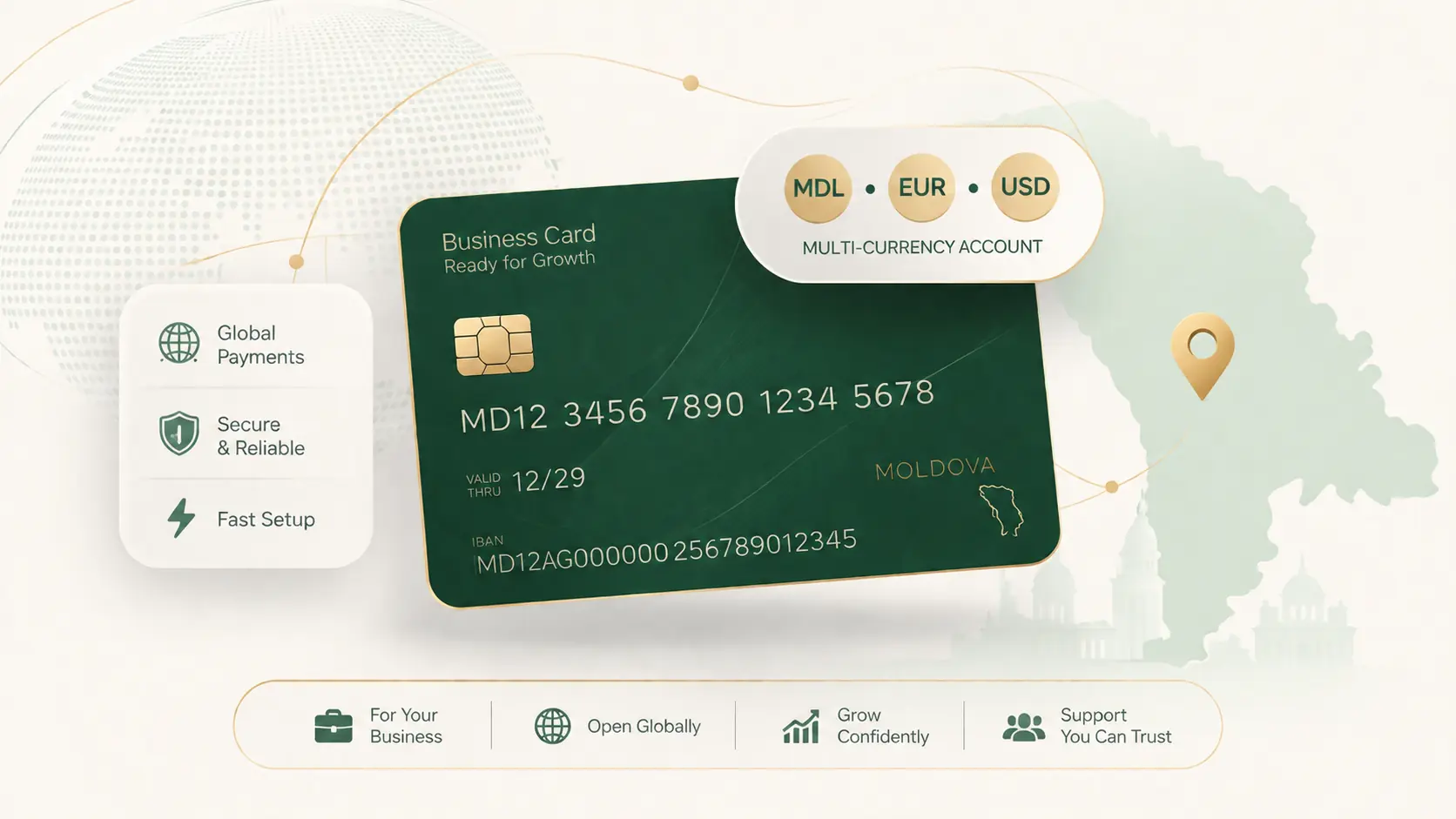
You registered the company. The certificate and IDNO are in hand. Now you need somewhere to actually receive money, and this is where a lot of non-resident founders hit their first real wall.
Opening a business bank account is the part of setting up in Moldova that people underestimate. Registration is fast and predictable. The bank account is slower, pickier, and depends heavily on how you present your business. Here’s how it works in 2026: what you can do from abroad, what still needs you in the room, and the reasons applications get turned down.
Yes. A Moldovan SRL owned and run by a non-resident can hold a business account, and you don’t need a Moldovan residence permit to get one. Moldovan banks take on companies with a non-resident director and a non-resident beneficial owner, as long as the file is clean and the business makes sense to them. And once it’s open, the account is usually multi-currency: you can hold and receive MDL, EUR and USD in one place, which matters if you invoice clients abroad or run an export or service business.
That last part is the catch. Registration is a legal right. A bank account is a bank’s decision. The bank runs its own compliance check, and it can say no. Most of this guide is about staying on the right side of that decision.
Everyone asks this first: do I have to fly to Chișinău?
Right now, usually part of it. A power of attorney lets your representative in Moldova prepare and file the whole dossier, and some banks will run the compliance interview over a video call. But many still want the company’s administrator physically present to sign the account papers and leave a signature specimen. Whether you can skip the trip comes down to the specific bank and your profile. There’s no single national rule.
This is changing. Moldova’s 2026 plan to digitalize business services includes remote account opening and a digital notary, expected to roll out later in the year. Once it’s live, more of the process moves online. Until then, plan for the possibility of one short visit, and treat “fully remote” as bank-by-bank rather than guaranteed.
Banks don’t just want proof the company exists. They want to understand what it does, who it deals with, and where the money comes from. Expect to hand over:
The business plan trips people up. It doesn’t need to be long. It needs to be believable and specific: a twelve-month picture of revenue, main counterparties, and volumes. Vague answers here are the fastest route to a rejection.
One detail people miss: banks usually want a recent proof of address, typically issued within the last three months, and source-of-funds documents that are current. Older paperwork tends to get sent back for a refresh.
A realistic sequence looks like this:
From a clean, complete file to a working account, three to six weeks is normal. A messy file drags that out or kills it: missing documents, an activity the bank doesn’t understand, a source of funds it can’t verify.
Registration almost never fails. Bank accounts do, and it’s worth knowing why before you apply.
The reason is nearly always compliance. Moldovan banks answer to strict anti-money-laundering rules, and a non-resident owner raises more questions than a local one. The usual triggers:
None of these is a dead end on its own. Each is a reason to prepare the file properly and apply to the right bank the first time. A rejection costs more than time. Banks talk to each other, and a declined application can follow you to the next one.
Bank fees are modest next to the setup itself. Expect an account-opening fee, often small or waived, a monthly maintenance fee, and per-transaction or currency-conversion charges that depend on how you operate. Exact numbers vary by bank and package, so treat any figure you find online as a starting point, not a quote. The real cost of a bank account isn’t the fee. It’s the time, and the risk of getting it wrong.
The steps above are the map. The hard part is the terrain: knowing which bank will actually say yes to your nationality and your business, packaging the file so compliance doesn’t stall, and handling the back-and-forth in Romanian.
That’s the part we do every week. We match you to a bank that fits your profile, prepare the dossier and the business plan so it clears review the first time, and act for you under power of attorney wherever the bank allows it. If a visit is genuinely required, you’ll know early, not after three weeks of waiting.
If you haven’t registered the company yet, start with our guide to registering as a foreign founder. Working in tech? A business account pairs naturally with the 7% IT Park regime. And our corporate services for non-residents put incorporation, banking, accounting and a registered address under one roof.
Talk to us about your situation, and we’ll tell you honestly which bank is your best shot and what your file needs before you apply.
Partly, and it depends on the bank. A power of attorney lets a representative prepare and file everything, and some banks run the compliance interview by video. Others still require the administrator to sign in person. Moldova is rolling out fully remote opening in 2026, but until it is widely live, assume one short visit may be needed.
The company's registration certificate and IDNO, articles of incorporation, your passport and those of any other beneficial owners, the beneficial-owner declaration, proof of address, source-of-funds information, and usually a short business plan showing your expected activity, counterparties and turnover.
Almost always compliance. Vague business activity, an unclear source of funds, a high-risk profile, or a company with no real link to Moldova all raise flags. A well-prepared file submitted to the right bank avoids most rejections.
Often at least once, to sign the account papers. At some banks a representative under power of attorney can sign for you instead, which saves the trip. It varies by bank and by your profile, and fully remote opening is only starting to arrive under Moldova's 2026 digitalization plan.
From a clean, complete file to a live account, usually three to six weeks: about five to ten working days to reach the compliance review, then another five to fifteen to signing and activation. Missing documents or an unclear business profile make it longer.
No. A business account belongs to the company, so the SRL has to be registered first, and you will need the registration certificate and IDNO to apply. We usually line up the bank while registration is in progress so there is no gap.
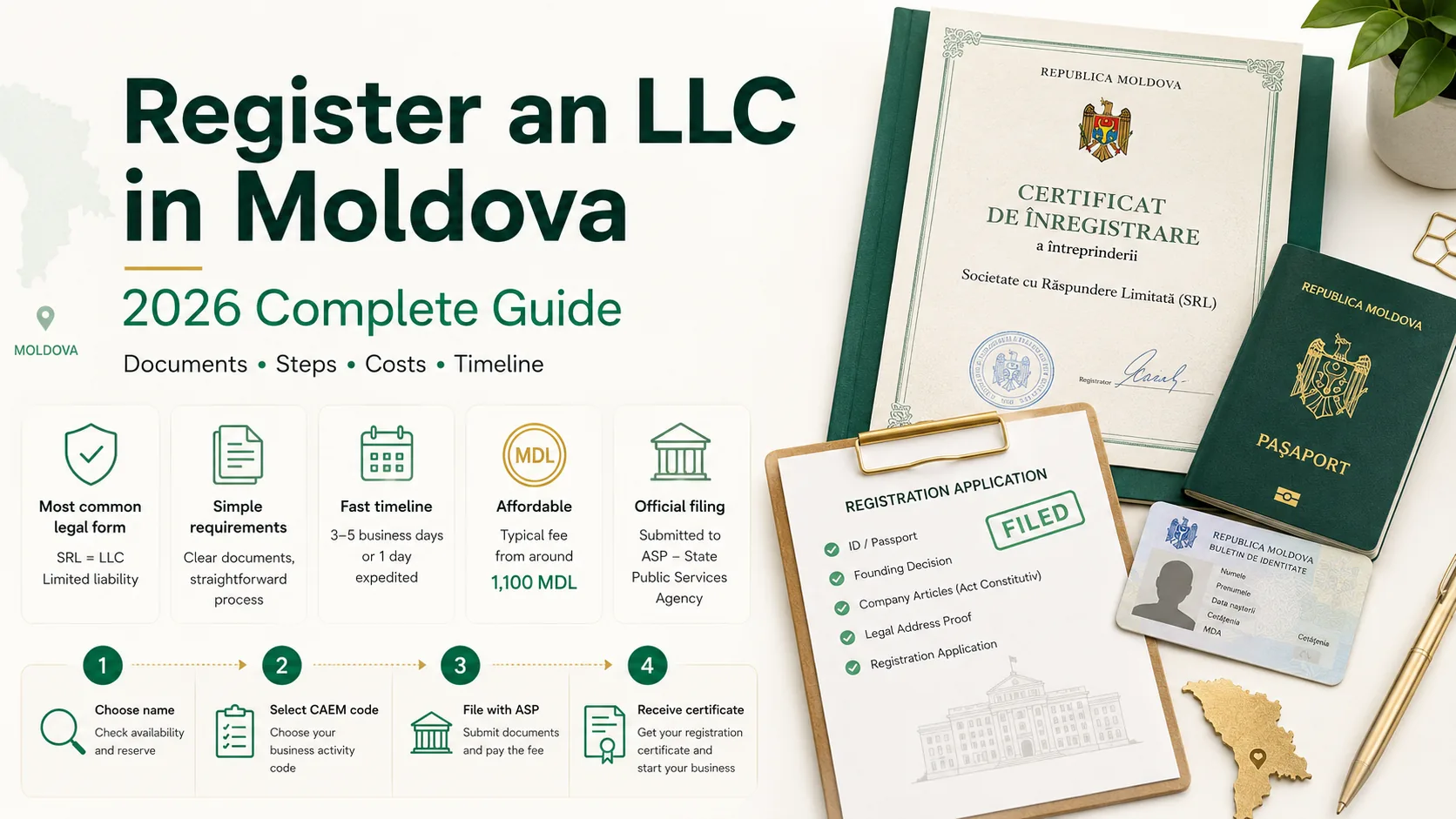
How to register an LLC in Moldova: required documents, steps, costs from 2,000 MDL, ~3-day timeline, share capital, and tax advantages. Full company formation guide.
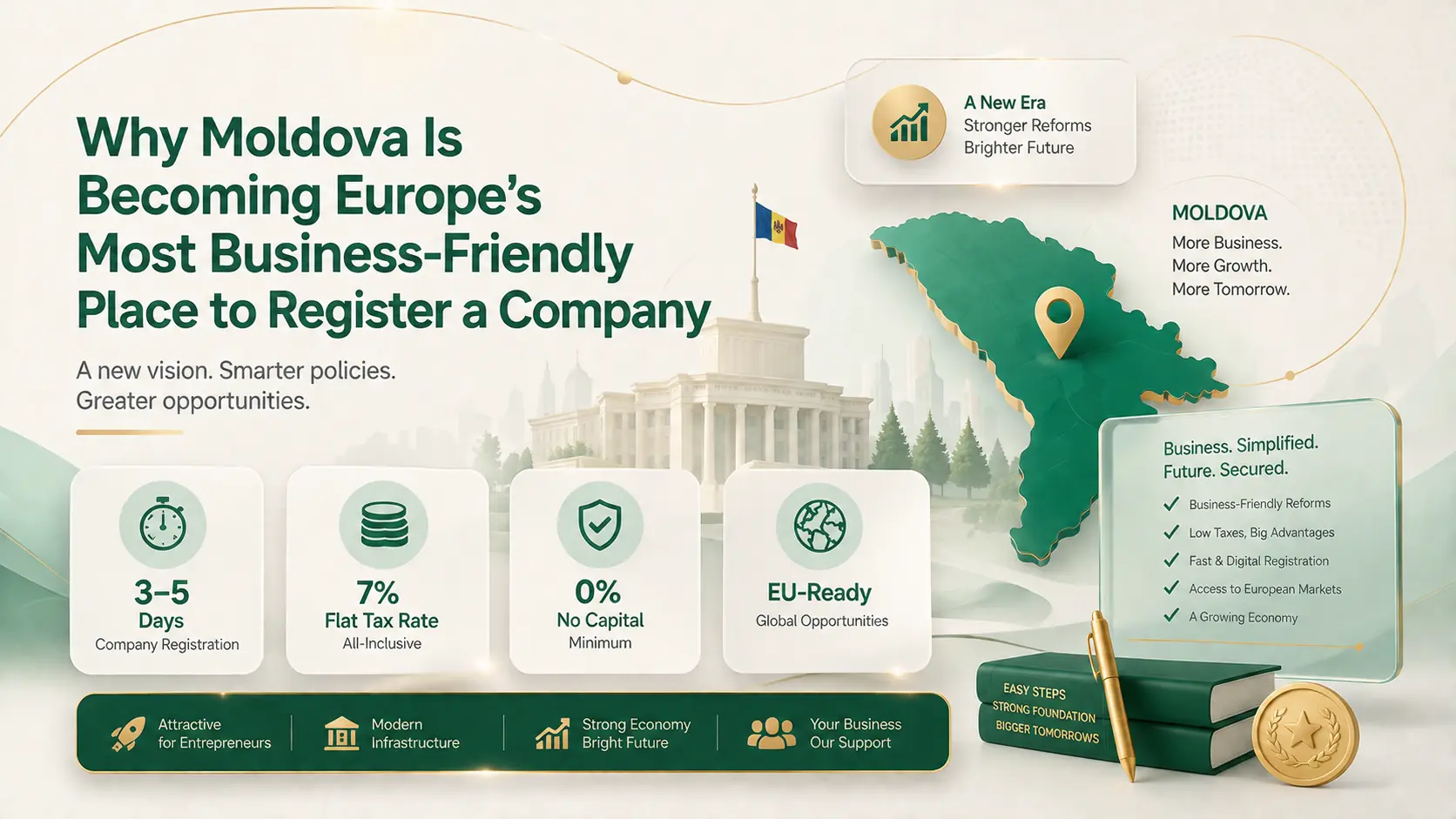
What Moldova's 2026 'European Economy, Efficient State' reform plan changes for registering a company — and why it is already a fast, remote-friendly place to start.
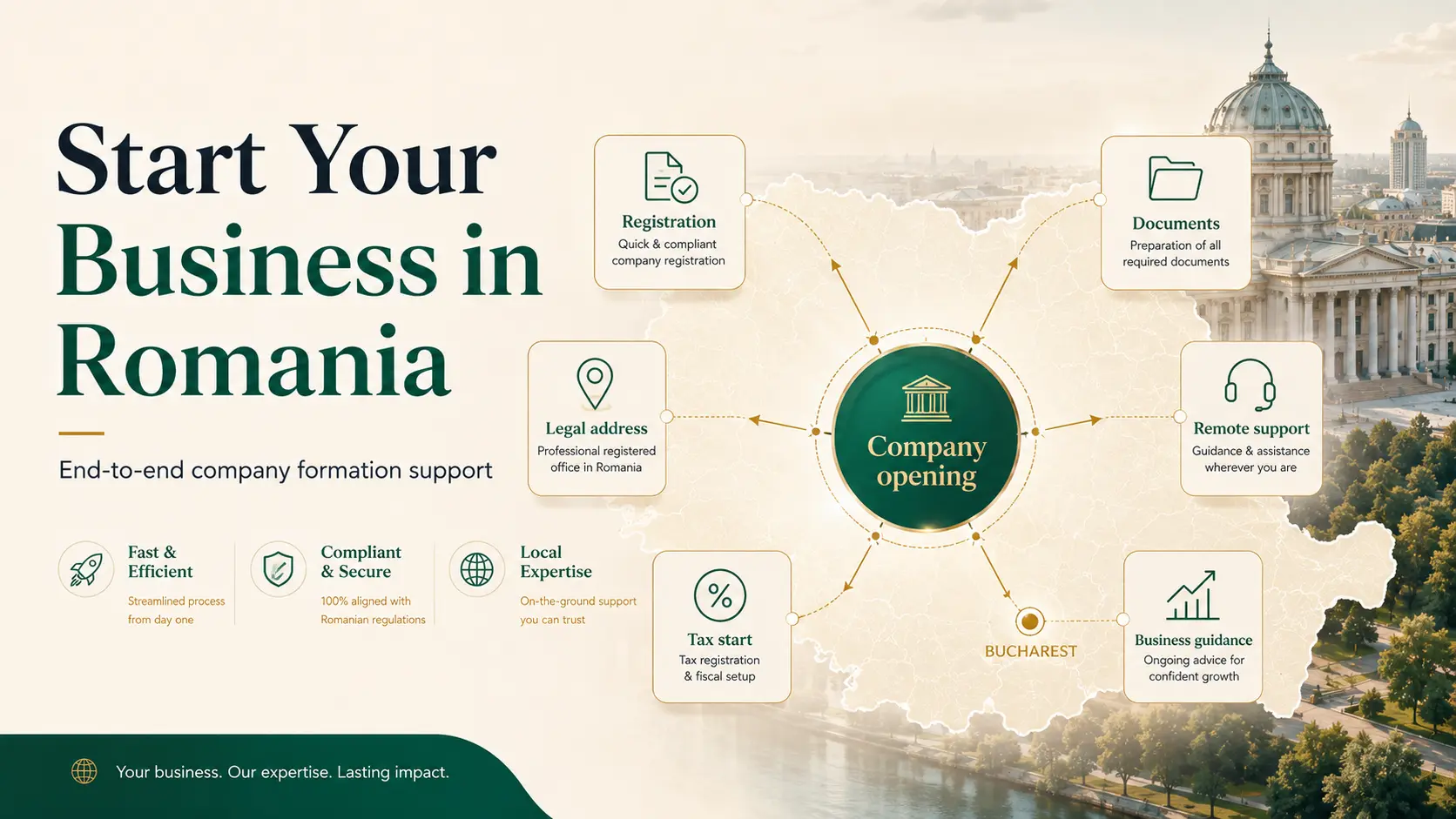
What a Romanian company actually adds, which reasons stopped being true in 2026, and what an SRL costs — whether you are starting out or already trading.