Complete Guide: How to Register an LLC in Moldova in 2026
How to register an LLC in Moldova: required documents, steps, costs from 2,000 MDL, ~3-day timeline, share capital, and tax advantages. Full company formation guide.
 DeschideCompanie
 What Moldova's 2026 'European Economy, Efficient State' reform plan changes for registering a company — and why it is already a fast, remote-friendly place to start.
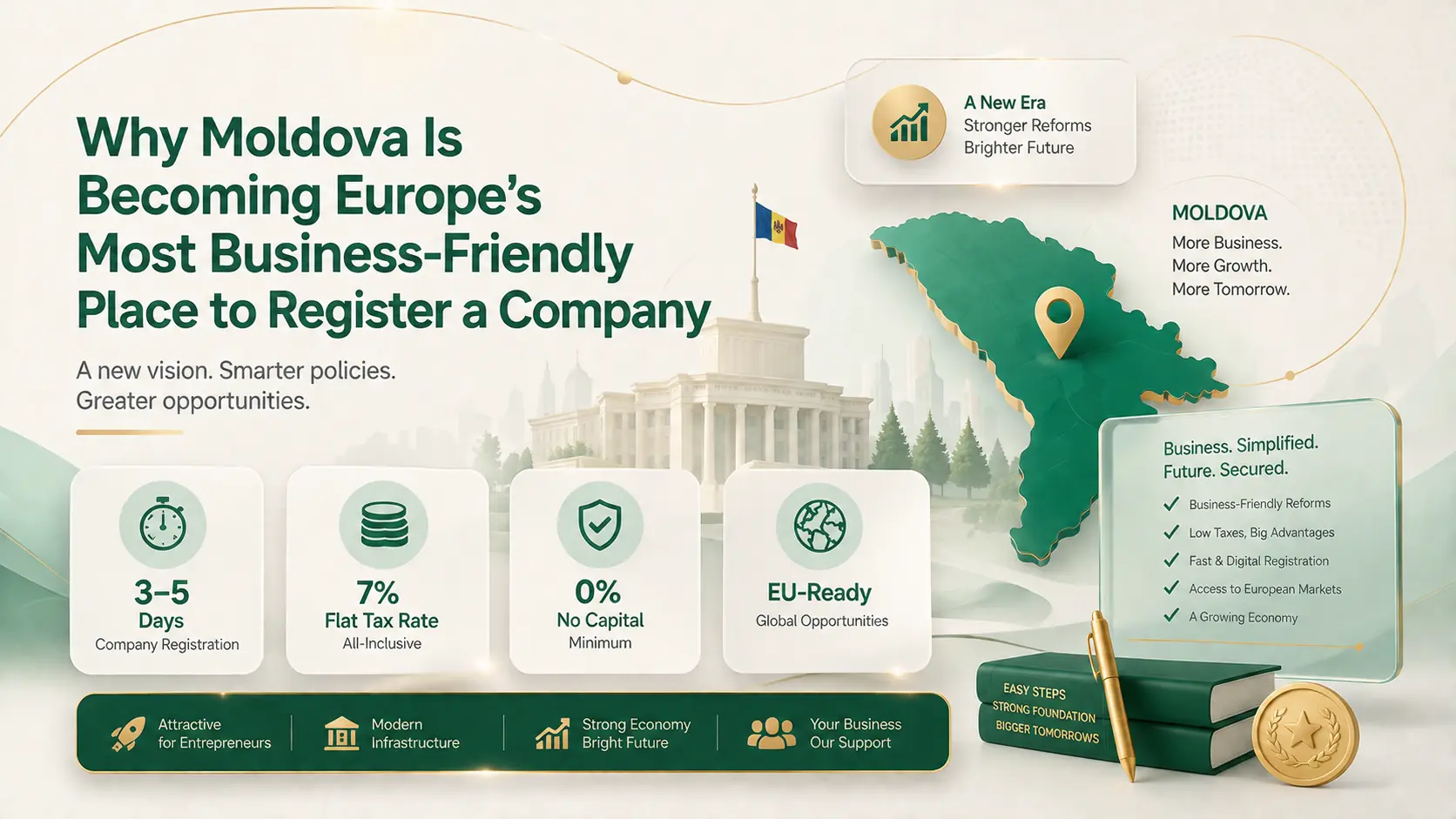
On 21 July 2026, Moldova’s Parliament approved a new government led by Prime Minister Vasile Tofan and, with it, a 147-page governing program with a blunt title: “European Economy, Efficient State.” Buried in the policy language is a line worth the attention of any international founder — the government’s stated goal to make Moldova “the most business-friendly country in Europe.”
That’s an ambition, not an accomplishment. But the plan is specific about how it intends to get there — less paperwork, more digital government, and dedicated infrastructure for tech. If you’ve been weighing whether to register a company in Moldova, this is a good moment to move — and it’s exactly the moment we’re built for. Below is what the program actually says, what’s already live, and how we turn it into a company on the ground for you.
Moldova is a small market, so its pitch to foreign capital is speed rather than scale. The program builds on that: move faster, cut rules more aggressively, and stay more predictable than the neighbors. It rests on five priorities — reviving the economy, using EU accession to modernize the state, building an efficient digital government, strengthening the rule of law, and improving quality of life.
For a founder, three of those matter directly: the digital state, deregulation, and the bet on technology. Let’s take them in turn.
The biggest hidden cost of setting up abroad is usually bureaucracy — counters, stamps, and the same form submitted five times. Moldova has been chipping away at this for years, and the new program leans into it. More and more government services for businesses now run online instead of across a counter, and the program commits to extending that to the key events in a company’s life.
Alongside it sits the “once-only” principle: businesses shouldn’t have to hand the same data to multiple state bodies. Once a public system holds your information, other systems query it rather than asking you again. Combined with digital identity and e-signatures, the direction is clear — managing a Moldovan company should feel closer to a cloud dashboard than a filing cabinet.
The program’s second theme is deregulation. Historically, doing business meant collecting authorizations and bracing for inspections. The plan proposes to flip the default toward good faith:
The honest caveat: these are commitments in a governing program, not laws that already bind every agency. They’ll roll out in stages. But the direction lowers the ongoing compliance burden that often surprises founders after registration.
Cutting red tape is only half the plan. Moldova is also going after technology, e-commerce, and exports into the EU single market.
If your business is in software, fintech, or AI, this is the part of the plan aimed squarely at you.
Two things are true at once. The reforms above are rolling out starting in 2026, so don’t treat them as boxes that must be ticked before you can start. And the core route to register a company in Moldova already works well today:
The reform plan doesn’t change those fundamentals — it improves the environment around them. The realistic read: Moldova is a genuinely low-friction place to set up now, and the government has committed, on paper, to making it lower still.
The one thing the plan can’t do for you is navigate a system that’s mid-transition. Rules are shifting, forms are moving online, and the fastest way to get a clean setup — with no wasted trips and no costly missteps — is to work with a partner who registers companies here every week. That’s us.
You don’t have to wait for the reforms to finish rolling out, and you don’t have to figure out Moldovan bureaucracy yourself. DeschideCompanie handles the whole setup for foreign founders, end to end and mostly remote:
One partner, one process, from the power of attorney to your company’s first day of trading. Explore our corporate services for non-residents, or contact us for a free consultation and a quote tailored to the country you’re founding from. Tell us where you are and what you want to build — we’ll handle Moldova.
Source: Government of the Republic of Moldova — official press release on the approval of the Tofan cabinet and the governing program “European Economy, Efficient State” (21 July 2026), which itself links to the full program document. Policy measures described here reflect commitments in that program and may change as they are implemented into law.
It's the 147-page governing program of the new cabinet led by Prime Minister Vasile Tofan, made public on 20 July 2026 and approved by Parliament the following day. It sets out five priorities — reviving the economy, using EU accession to modernize the country, building an efficient digital state, strengthening security and the rule of law, and improving quality of life. One stated ambition is to make Moldova 'the most business-friendly country in Europe.'
Vasile Tofan, a Harvard-educated executive, was approved by Parliament on 21 July 2026 with a 53-vote majority. He replaced Alexandru Munteanu, who stepped down after about eight months, prompting the cabinet to resign.
Not the core legal route. Today you can still found an LLC (SRL) remotely through a power of attorney, and a foreigner can own 100% of the company. The reforms in the program are rolling out starting in 2026, so treat them as the direction of travel — not steps you have to wait for before setting up.
The program signals a pro-investment stance — reducing the budget deficit, privatizing state companies, and encouraging investment in technology and AI — but it does not lock in specific tax-rate cuts. For the rates that actually apply today, see our 2026 taxes and fees guide.
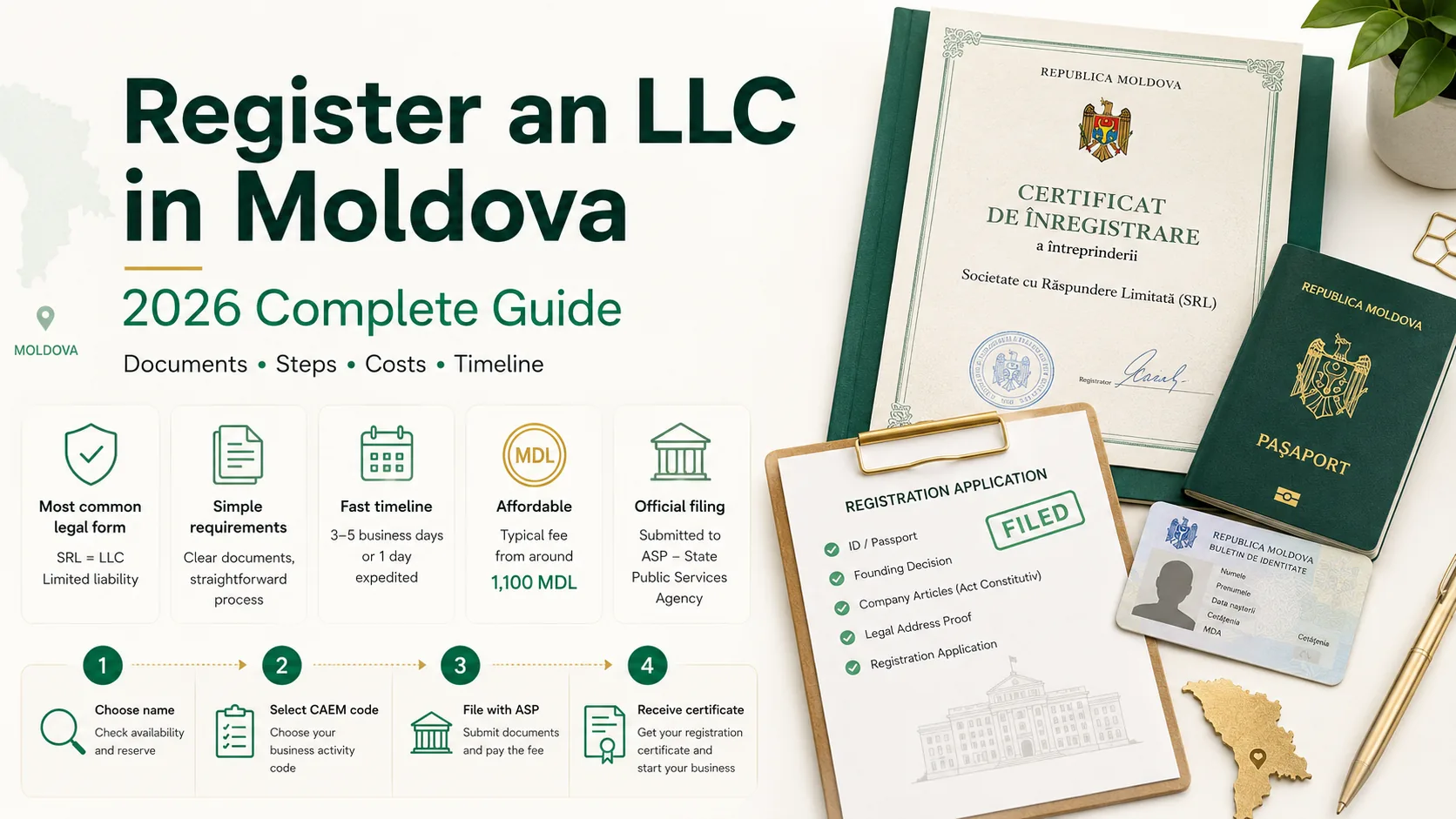
How to register an LLC in Moldova: required documents, steps, costs from 2,000 MDL, ~3-day timeline, share capital, and tax advantages. Full company formation guide.
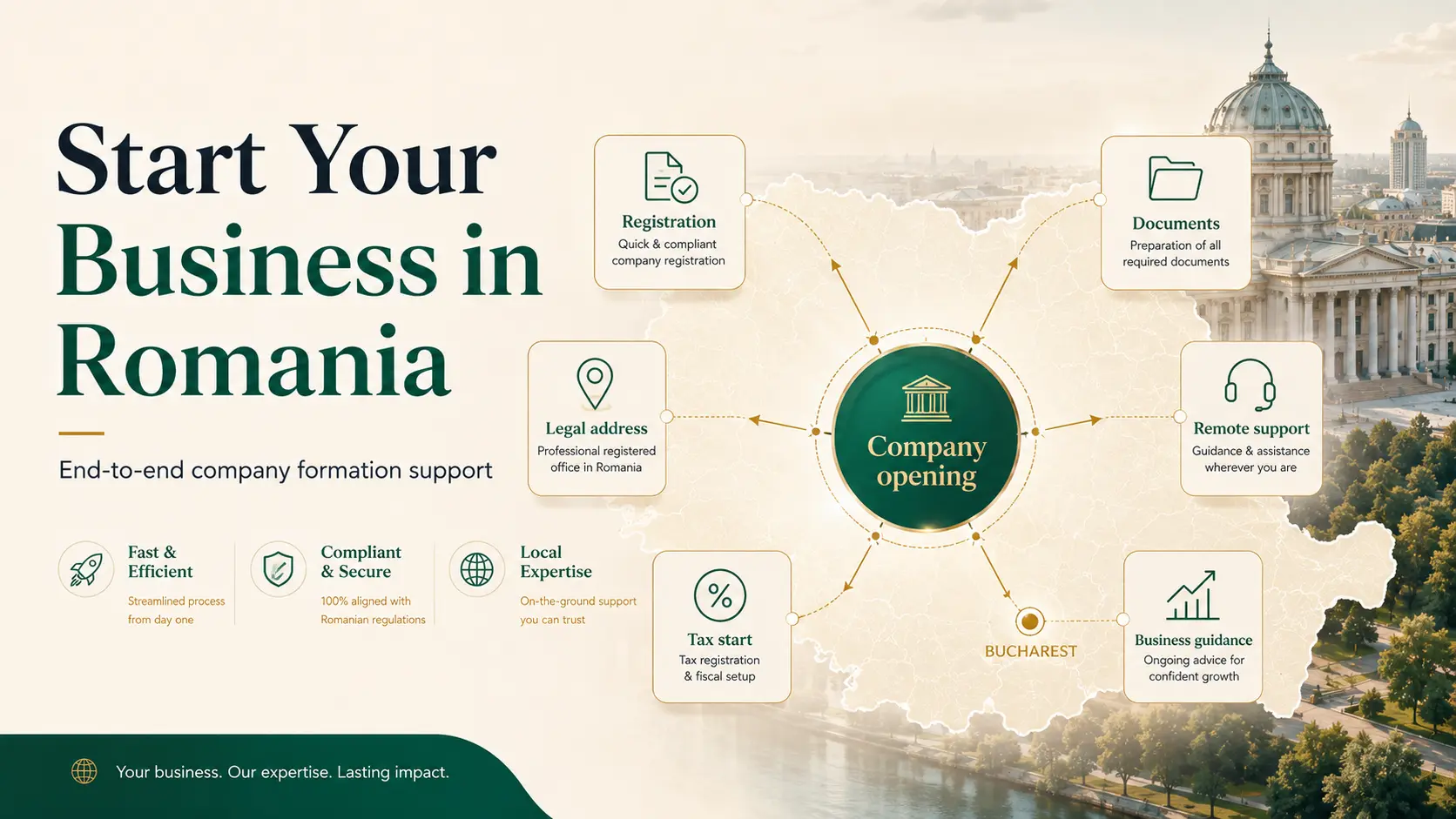
What a Romanian company actually adds, which reasons stopped being true in 2026, and what an SRL costs — whether you are starting out or already trading.
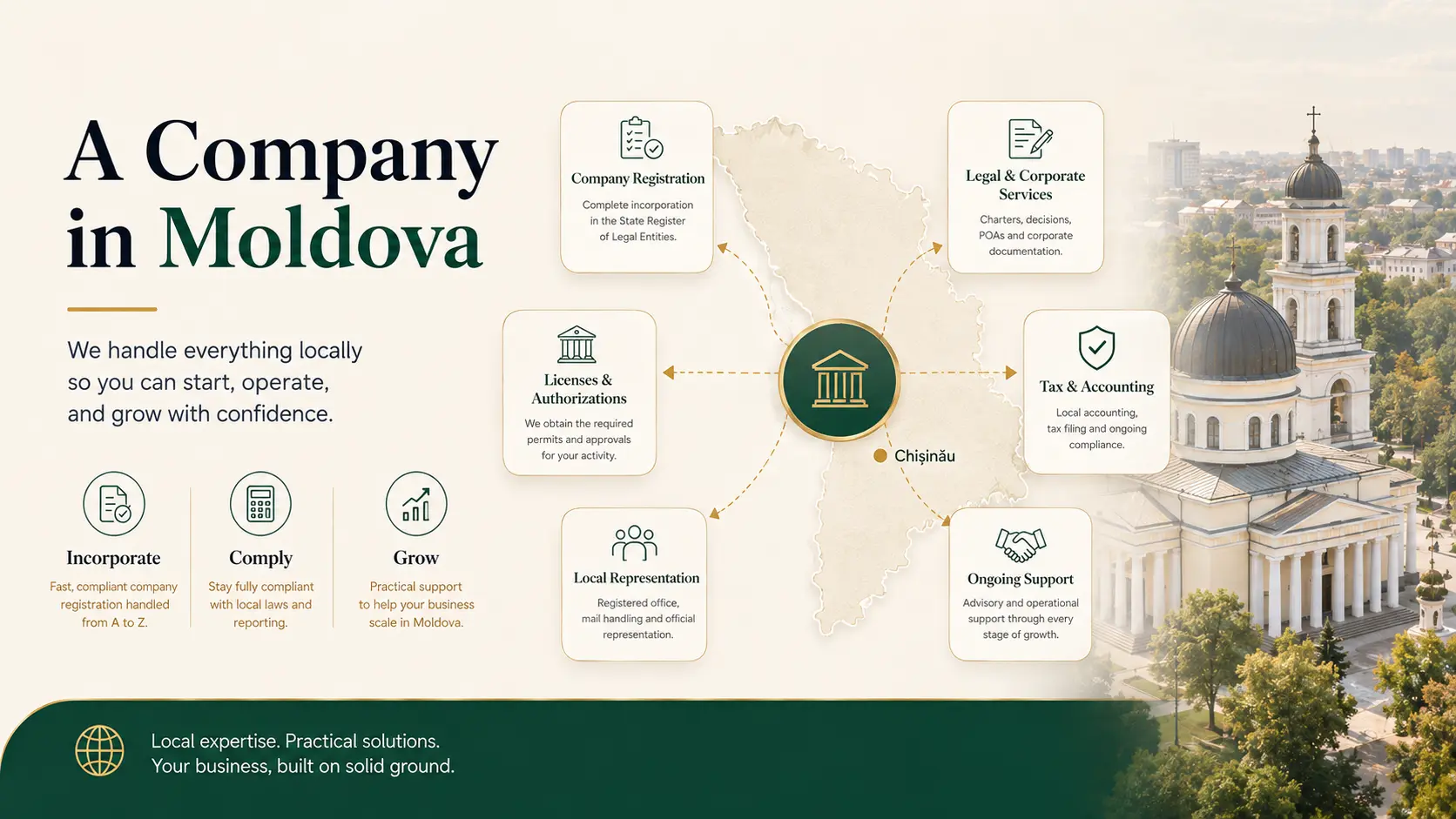
What a Moldovan company gives a Romanian founder, what registering one involves — no apostille, a notarised power of attorney is enough — and what it does not solve.