Complete Guide: How to Register an LLC in Moldova in 2026
How to register an LLC in Moldova: required documents, steps, costs from 2,000 MDL, ~3-day timeline, share capital, and tax advantages. Full company formation guide.
 DeschideCompanie
 Complete guide to Moldova's tax system - corporate income tax, VAT, social contributions, and tax optimization for your business.
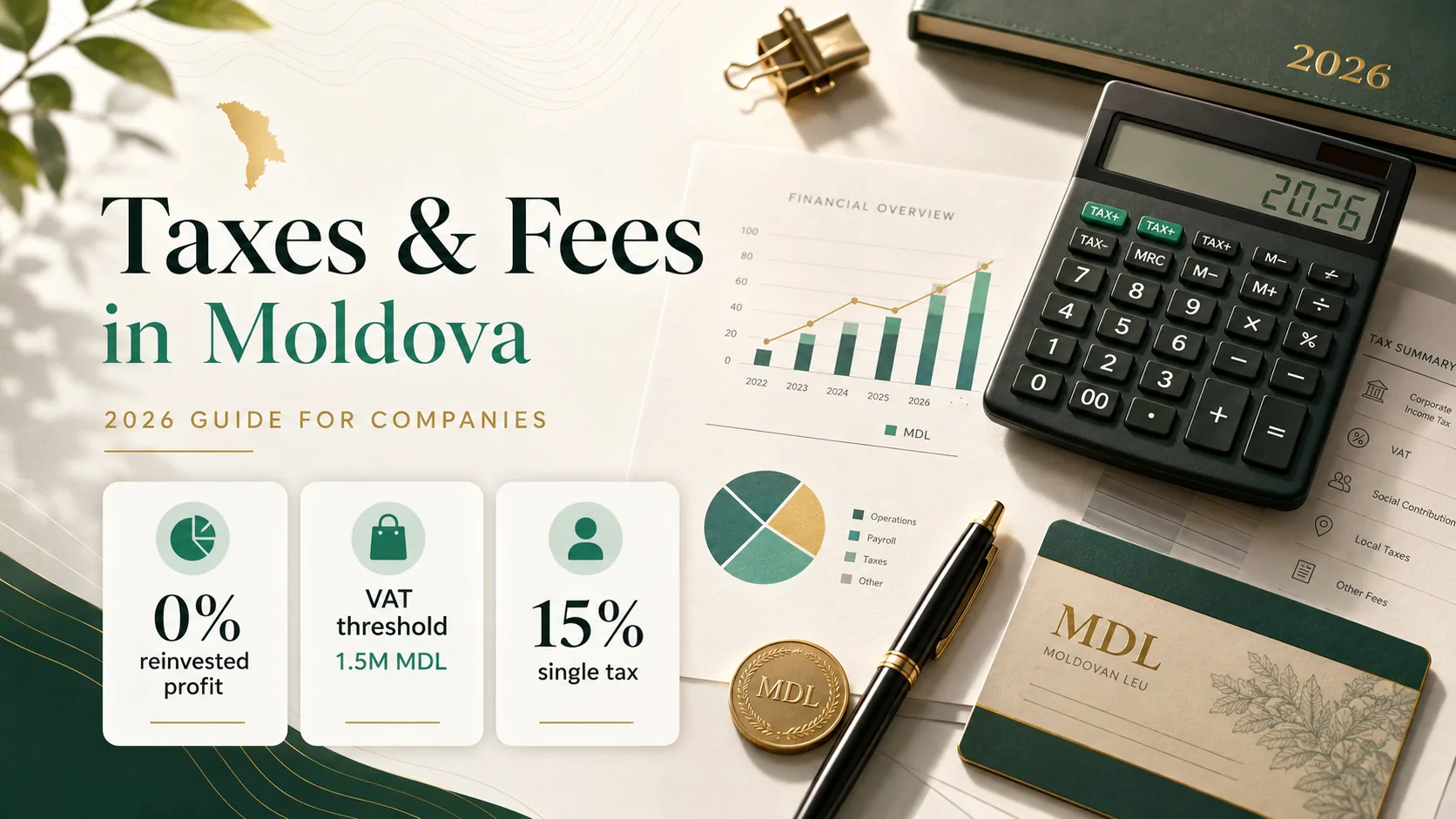
The year 2026 introduces a mix of tax incentives and new regulations for early-stage businesses in the Republic of Moldova. For company founders, understanding how corporate income tax, VAT, and special tax regimes work is essential to avoid unexpected costs and to optimize cash flow from the very first year.
One of the most significant tax incentives for small and medium-sized enterprises remains in force in 2026: a zero corporate income tax rate on undistributed and reinvested profits.
This incentive generally applies to companies with:
For a newly established LLC, this means that profits retained in the company and reinvested in business development (equipment, marketing, staff, product development) are not subject to corporate income tax.
Once profits are distributed as dividends, taxation applies at the individual level. The company withholds 6% at source under Article 90¹ of the Fiscal Code, which makes the timing of profit distribution a strategic financial decision.
In 2026, the mandatory VAT registration threshold has been increased:
For newly established companies, this provides additional breathing room before entering the VAT system, which involves more complex reporting and compliance.
After exceeding the threshold:
In specific sectors, such as electricity and natural gas trading, a reverse charge VAT mechanism applies as of 2026, relevant only for licensed energy traders.
For founders who do not wish to establish an LLC immediately, a new tax regime for independent entrepreneurs and freelancers has been introduced.
Key features include:
For freelancers, consultants, and early-stage professionals, this regime can be an attractive alternative to setting up a company, particularly when income is variable.
However, for larger projects, corporate clients, and investment opportunities, partners typically prefer to work with legal entities (LLCs).
Several tax changes primarily affecting individuals also have indirect implications for company founders:
For most service-based startups, these changes do not significantly impact operational costs.
For newly established companies, 2026 offers clear opportunities for tax optimization:
The optimal choice depends on income level, client profile, and growth plans. An early consultation with an accountant or tax advisor can result in tangible savings of both time and money.
Contact us for personalized tax consulting!
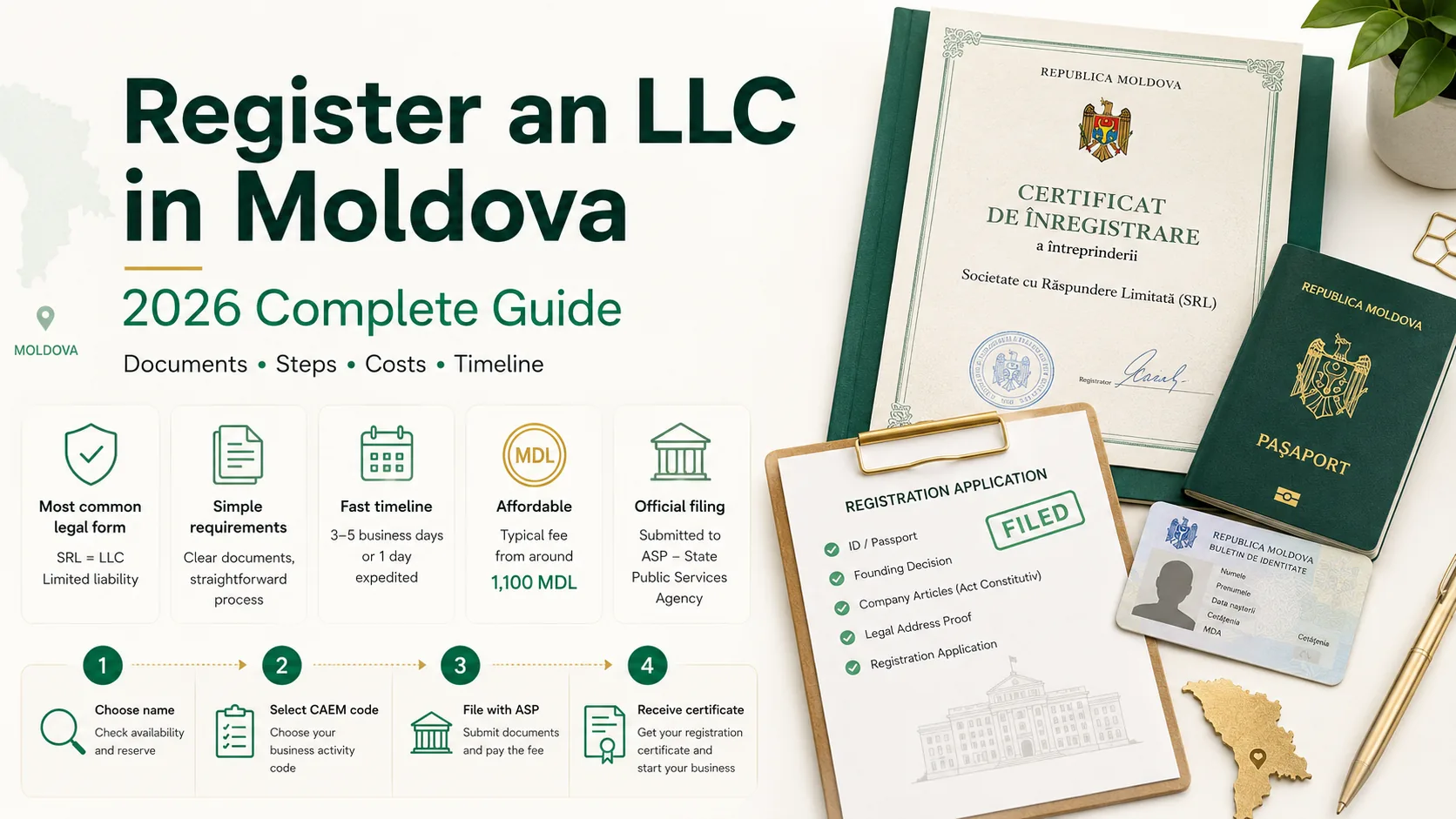
How to register an LLC in Moldova: required documents, steps, costs from 2,000 MDL, ~3-day timeline, share capital, and tax advantages. Full company formation guide.
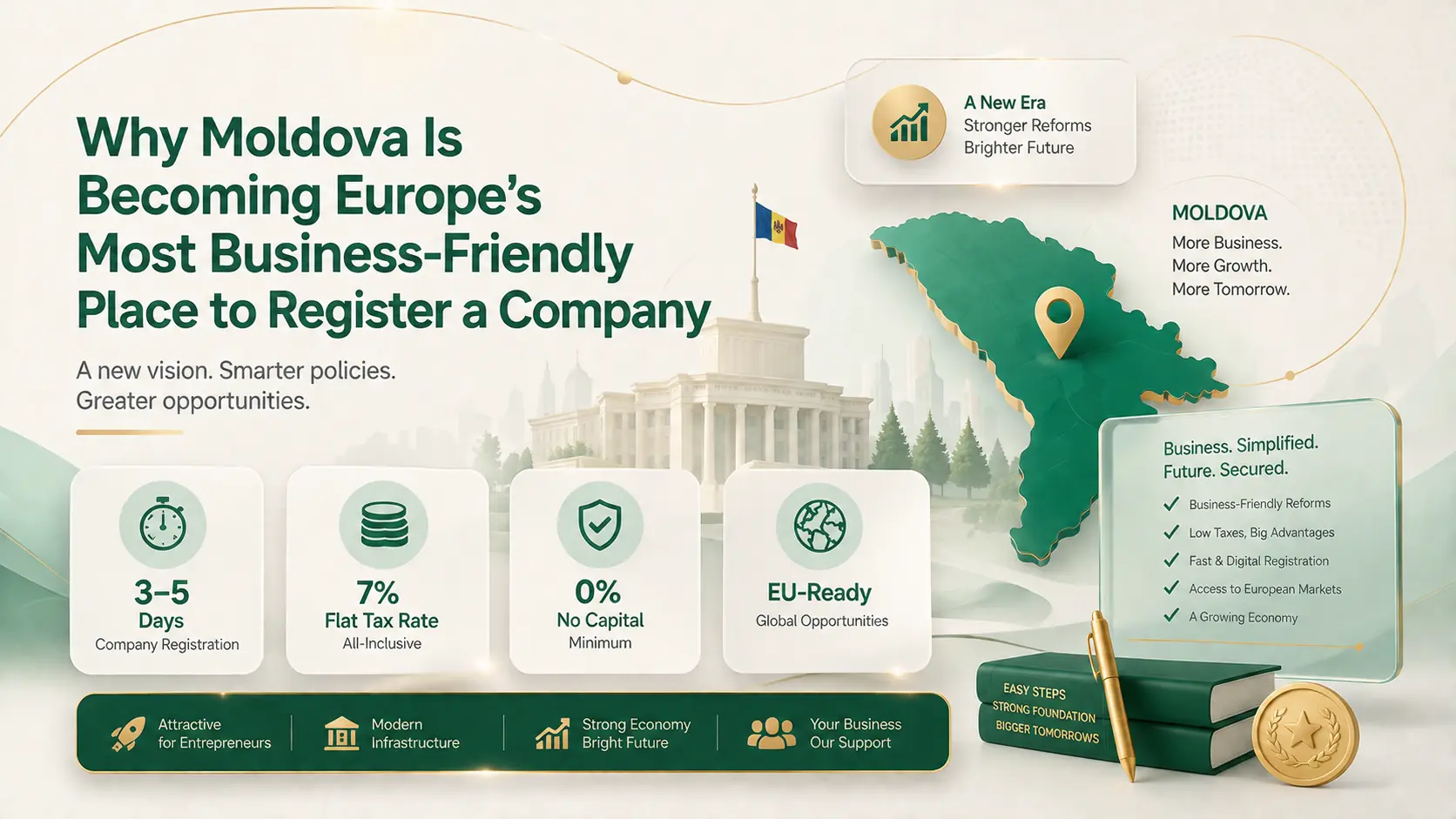
What Moldova's 2026 'European Economy, Efficient State' reform plan changes for registering a company — and why it is already a fast, remote-friendly place to start.

What a Romanian company actually adds, which reasons stopped being true in 2026, and what an SRL costs — whether you are starting out or already trading.